01 / 03
Underfloor vs Mid-Floor Insulation
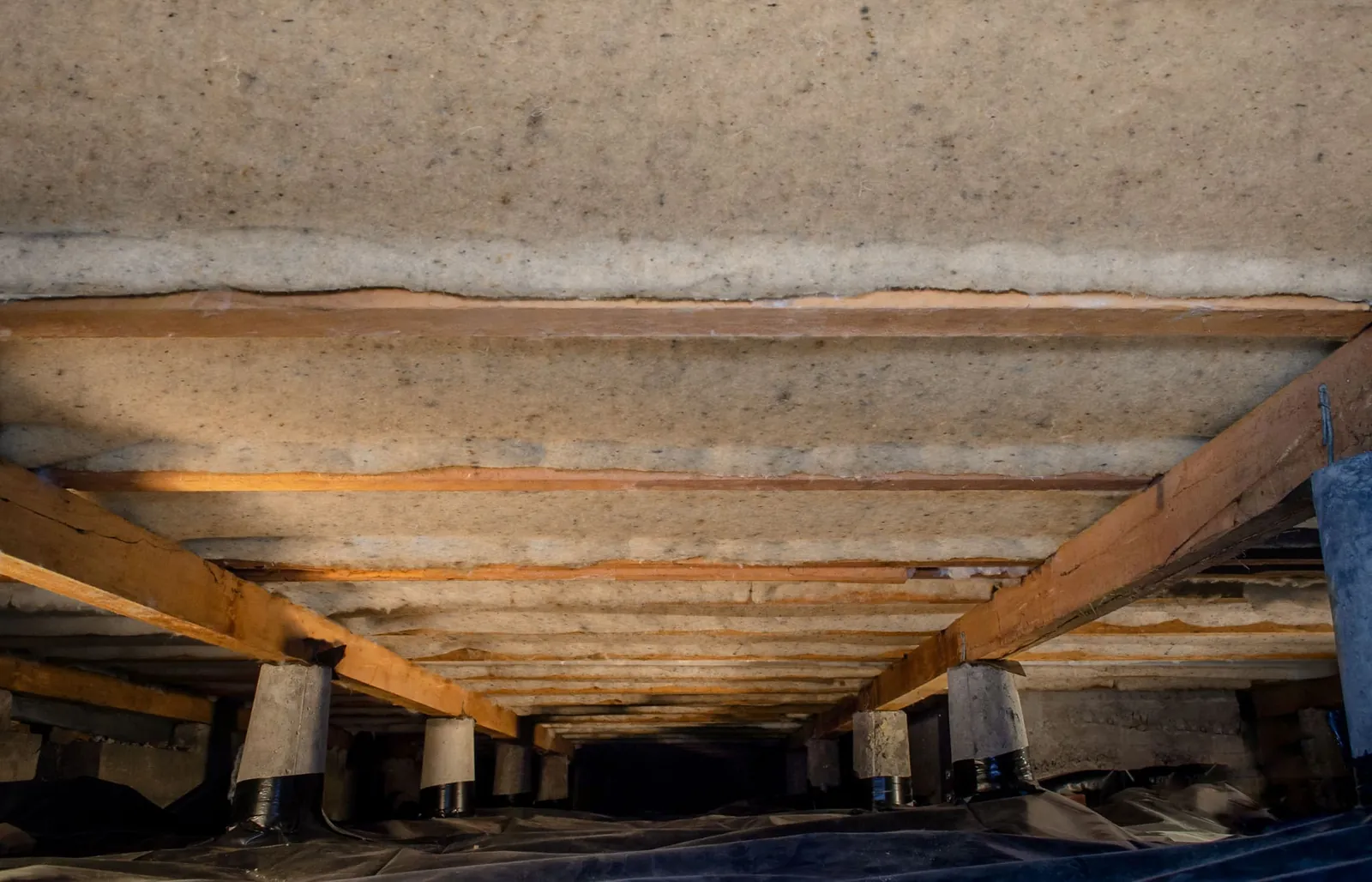
Most Canterbury homes with suspended timber floors have a crawl space underneath, that's where underfloor insulation goes. Fiberglass batts are cut to size and pushed up between the floor joists from below, then secured with polypropylene strapping so they stay snug against the underside of the flooring. Mid-floor insulation is used in multi-storey homes where you want thermal or acoustic separation between levels. The approach you need depends on your home's construction, and we'll advise which suits your situation during the free assessment.
02 / 03
The Installation Process
Our installers work entirely beneath your home, so there's zero disruption to your daily routine. First, we lay a polythene ground moisture barrier across the exposed soil to stop damp rising into the subfloor space, this is especially important in Canterbury suburbs where water tables are high. Then the batts are measured, cut, and fitted between each joist pair. We use fiberglass batts because they offer excellent thermal performance and longevity in confined spaces. The whole process typically takes a single day for a standard three-bedroom home. You need at least 450mm clearance under the floor for access.
03 / 03
Canterbury's Cold Ground
Canterbury's flat alluvial plains mean many homes sit on ground that holds cold and moisture. Christchurch averages 60-80 ground frost days per year, and in the western suburbs around Rolleston and Lincoln, overnight temperatures drop even lower. That cold ground radiates chill directly into your subfloor space and up through your floors. A ground moisture barrier combined with quality underfloor insulation tackles both problems at once, keeping your floors warmer and reducing the dampness that leads to mould and musty smells beneath the house.